| 8:30 - 9:00 |
EDCC 2026 Registration |
| 09:00 - 9:30 |
AI-SS 2026 Opening Session
The Workshop Chair Professor Hongmei (Mary) He and Co-Chair Professor Shujun Li will welcome all participants and give a report of the peer review process.
- Chair and Co-Chair's Welcome Address

- Co-Chair (TPC Chair)'s Report
|
| 09:30 - 10:30 |
AI-SS 2026 Keynote (Chair: Professor Shujun Li, University of Kent, UK)
Speaker: Professor Aad van Moorsel, Chair in Decentralised Systems & Head of School, School of Computer Science, University of Birmingham, UK
Title: The Uneasy Marriage of AI and Dependability
Abstract: In this presentation, the speaker will discuss the relation between designing traditional dependable, fault-tolerant computer systems and enhancing the robustness of modern-day AI-based services. On the one hand, AI mechanisms such as ensembles and reject option have direct counterparts in hardware and software dependability, even though their motivation, justification and implementation are quite different. On the other hand, AI shifts the emphasis to a new type of faults that are hard to identify and, in the case of Generative AI, underspecified. The speaker will reflect on how to bridge between the world of dependability and AI, and provide a number of ways forward to design highly dependable AI-based systems.
Bio: 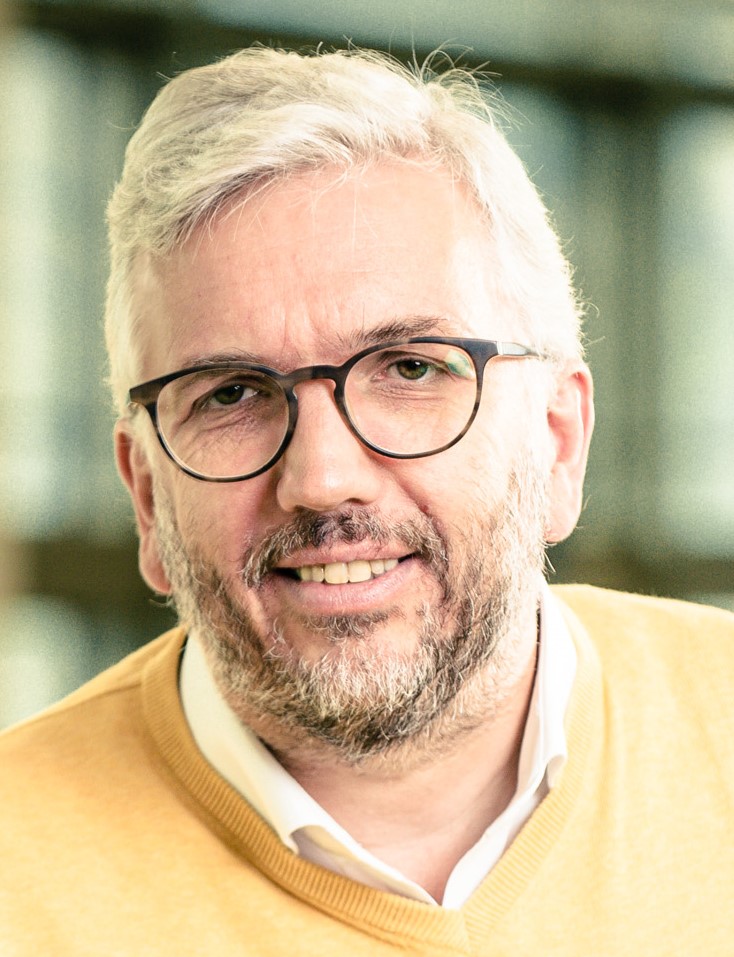 Aad van Moorsel is Professor in Decentralised Systems and Head of the School of Computer Science at University of Birmingham. He has been the Principal Investigator in various large research grants in human-centred cyber security and system dependability. Prior to joining Birmingham he established Newcastle University's NCSC/EPSRC Academic Centre of Excellence in Cyber Security Research and pioneered degree apprenticeships as Director of the Institute of Coding at Newcastle. He was also at University of Illinois at Urbana Champaign as a postdoctoral researcher in the Coordinated Science Laboratory. During his time at Lucent Technologies/Bell Labs Research and HP Labs he gained ample experience of industry-style research and research management, and he co-founded the startup CloudIdentity Ltd in human-centric identity management, which since has been successfully sold. He is the author of over 200 peer-reviewed research articles and of 4 US patents. Aad van Moorsel is Professor in Decentralised Systems and Head of the School of Computer Science at University of Birmingham. He has been the Principal Investigator in various large research grants in human-centred cyber security and system dependability. Prior to joining Birmingham he established Newcastle University's NCSC/EPSRC Academic Centre of Excellence in Cyber Security Research and pioneered degree apprenticeships as Director of the Institute of Coding at Newcastle. He was also at University of Illinois at Urbana Champaign as a postdoctoral researcher in the Coordinated Science Laboratory. During his time at Lucent Technologies/Bell Labs Research and HP Labs he gained ample experience of industry-style research and research management, and he co-founded the startup CloudIdentity Ltd in human-centric identity management, which since has been successfully sold. He is the author of over 200 peer-reviewed research articles and of 4 US patents.
|
| 10:30 - 11:00 |
EDCC 2026 Tea/Coffee Break |
| 11:00 - 12:30 |
AI-SS 2026 Technical Session 1: AI and Cyber Threats (Chair: Professor Shujun Li, University of Kent, UK)
 Best Paper Award (certificate) Best Paper Award (certificate)
HaiR – A Human-Centric AI Remediation Framework
Olayinka Adeboye, Rabab Al Zaidi, Aderemi Adenihun, Segun Akinseye, Lee Speakman and Muhammad Ateeq (University of Salford, UK)- An Empirical Evaluation of Prompt Injection Vulnerabilities in Large Language Models Across Multilingual and Obfuscated Attack Scenarios
Caglar Uysal, Baturay Birinci, Suha Mutluergil and Orcun Cetin (Sabanci Univeristy, Türkiye)
- Resilience to Disinformation Among Cyber Security and Information Warfare Professionals: Why Experts May Get it Wrong
Allison Wylde (University of Kent, UK), Fabio Petani (Université Bourgogne Europe, Burgundy, France), Issa Issa (ESSCA, France) and Fortuna Cassoria (Université Bourgogne Europe, Burgundy, France)
- Leveraging Sparse Intelligence: Large Language Models Can Provide Actionable Priorities From Limited Cyber Threat Data
Osama Al Haddad (Macquarie University, Australia), Muhammad Ikram (Macquarie University, Australia), Muhammad Ejaz Ahmed (Data61, CSIRO, Australia) and Young Choon Lee (Macquarie University, Australia)
Each paper will have 15-20 mins for the presentation and up to 5 mins for Q&A.
|
| 12:30 - 14:00 |
EDCC 2026 Lunch Break |
| 14:00 - 15:30 |
AI-SS 2026 Panel Discussion: "Towards Dependable and Secure AI for Critical Systems" (Facilitator: Professor Hongmei (Mary) He, University of Salford, UK)
Confirmed panellists:
- Ali Hessami, Director of R&D and AI, Vega Systems, UK; Chair of IEEE UK and Ireland Society on Social Implications of Technology (SSIT) Chapter
- Gareth Howells, Professor of Cyber Security, University of Essex, UK; Founder, Director and CTO, Metrarc Ltd, UK
- Carl Shaw, Codasip, UK
- Harish Vundavalli, Senior Technical Architect, Strategic Education, Inc., USA
The panel discussion is open to remote participation for free. The remote dial-in link is https://teams.microsoft.com/meet/33456631026774?p=e4mxXeaCG8AfDZlJHq; the Meeting ID is 334 566 310 267 74 and the Passcode is mT9hj7Qi.
Bios:
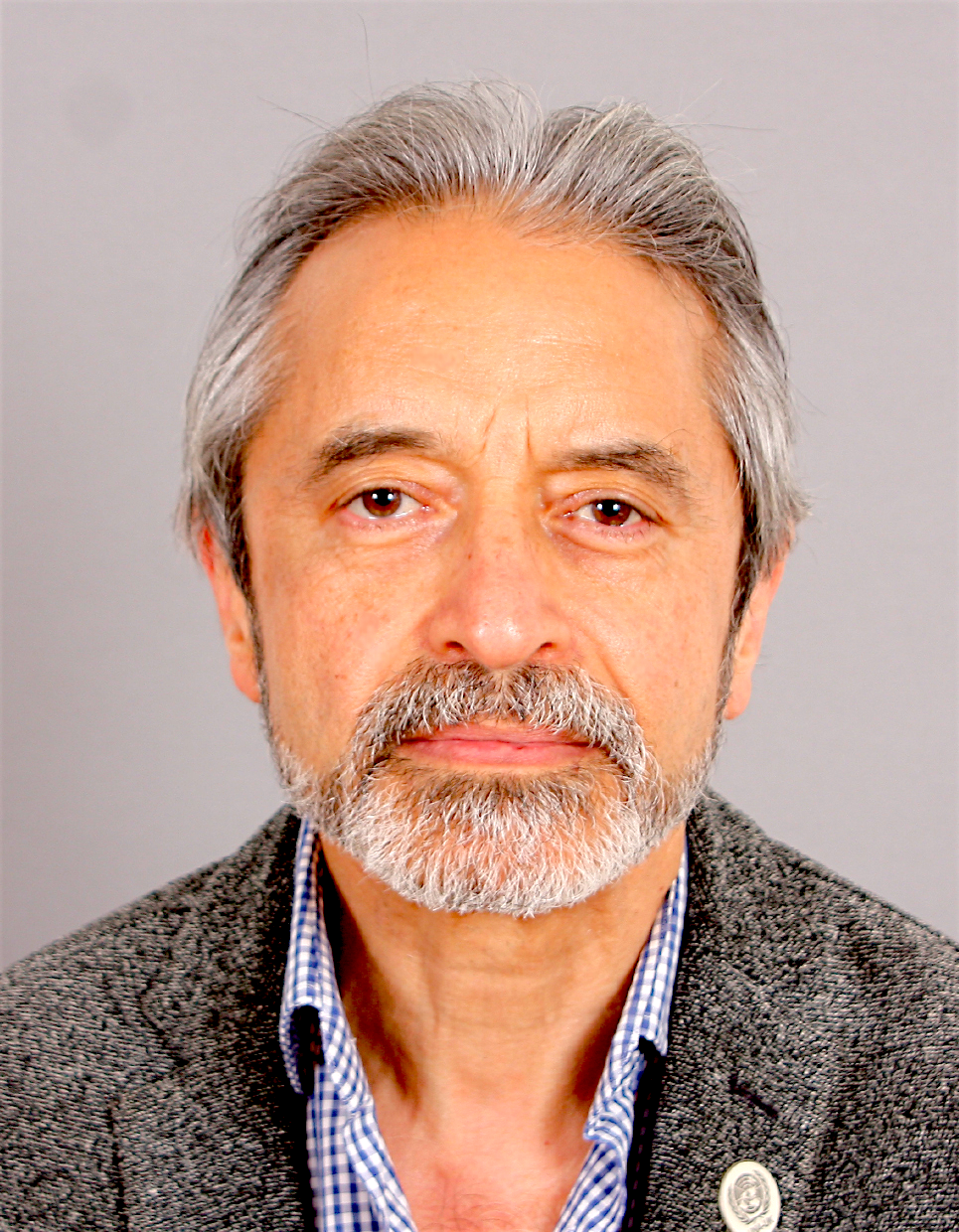 Ali Hessami is currently the Director of R&D and Innovation at Vega Systems. He has extensive track record in systems assurance and safety, security, sustainability, knowledge management methodologies and has a background in design and development of advanced control systems for business and safety critical industrial applications. Ali represents UK on CENELEC & IEC safety systems, hardware & software standards committees. He was appointed by CENELEC as convener of a number of Working Groups and is currently SG leader in PT63452, IEC Cyber Security standardization and chair of IEEE 7801 “Technical Knowledge Commons” standard. During 2017 he joined and was subsequently appointed as Chair and Technical Editor of the new landmark IEEE P7000 standard focused on “Addressing Ethical Concerns in System Design”. In November 2018, he was appointed as the Vice Chair and Process Architect of the IEEE’s global Ethics Certification Programme for Autonomous & Intelligent Systems (ECPAIS) later rebranded as IEEE CertifAIEd©. He is also the chair of BSI GEL/9/6 subcommittee focused on ML, AI and Cybersecurity standardisation. He has been the past Chair of the IEEE in the UK and the Republic of Ireland driving an extensive programme of reform and member value initiatives ranging from a structured educational programme, Open Days, Lectures and Professional Recognition for members. He started and chaired the IEEE SMC, Systems Council, IAS and SSIT chapters & SIGHT group in the UK and Ireland Section. He is also the founder and chair of the Universal Ethics-AI Community of Practice that drives progressive research in challenging aspects of AI technologies and publishes outcomes under Creative Commons License for the benefit of humanity. He is a Visiting Professor at London City University’s Centre for Systems and Control and at Beijing Jiaotong University School of Electronics & Information Engineering. He is also a Fellow of Royal Society of Arts (FRSA), Fellow of the UK Institution of Engineering & Technology (IET) and a Life Senior Member of IEEE. Ali Hessami is currently the Director of R&D and Innovation at Vega Systems. He has extensive track record in systems assurance and safety, security, sustainability, knowledge management methodologies and has a background in design and development of advanced control systems for business and safety critical industrial applications. Ali represents UK on CENELEC & IEC safety systems, hardware & software standards committees. He was appointed by CENELEC as convener of a number of Working Groups and is currently SG leader in PT63452, IEC Cyber Security standardization and chair of IEEE 7801 “Technical Knowledge Commons” standard. During 2017 he joined and was subsequently appointed as Chair and Technical Editor of the new landmark IEEE P7000 standard focused on “Addressing Ethical Concerns in System Design”. In November 2018, he was appointed as the Vice Chair and Process Architect of the IEEE’s global Ethics Certification Programme for Autonomous & Intelligent Systems (ECPAIS) later rebranded as IEEE CertifAIEd©. He is also the chair of BSI GEL/9/6 subcommittee focused on ML, AI and Cybersecurity standardisation. He has been the past Chair of the IEEE in the UK and the Republic of Ireland driving an extensive programme of reform and member value initiatives ranging from a structured educational programme, Open Days, Lectures and Professional Recognition for members. He started and chaired the IEEE SMC, Systems Council, IAS and SSIT chapters & SIGHT group in the UK and Ireland Section. He is also the founder and chair of the Universal Ethics-AI Community of Practice that drives progressive research in challenging aspects of AI technologies and publishes outcomes under Creative Commons License for the benefit of humanity. He is a Visiting Professor at London City University’s Centre for Systems and Control and at Beijing Jiaotong University School of Electronics & Information Engineering. He is also a Fellow of Royal Society of Arts (FRSA), Fellow of the UK Institution of Engineering & Technology (IET) and a Life Senior Member of IEEE.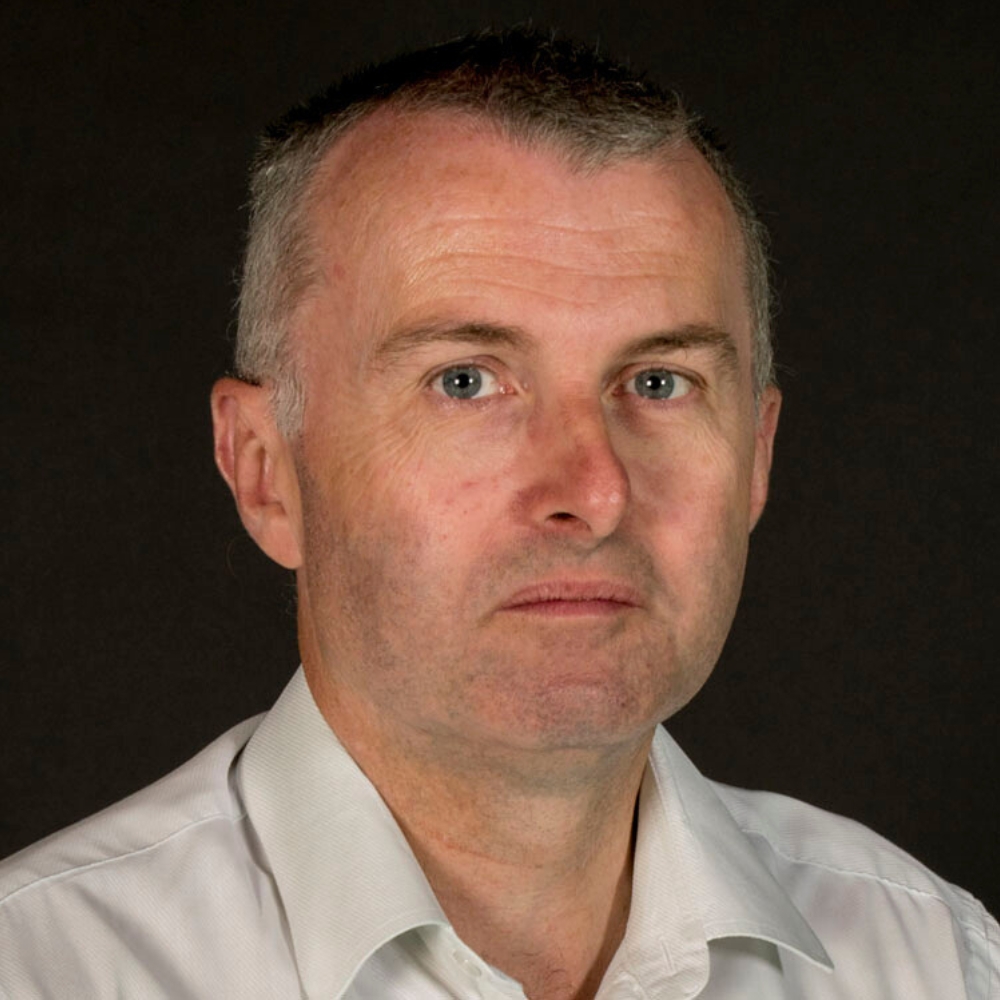 Gareth Howells is Professor of Cyber Security at the University of Essex and Founder, Director and Chief Technology Officer of cyber security technology company, Metrarc Ltd, a University spin-out company. He has been involved in research relating to cyber security, AI and secure communications for over 35 years and has published over 240 papers in the technical literature, co-editing two books and contributing to several other edited publications. His core research interests are device authentication, trustworthy Agentic AI systems, secure communications and identity management. His current major research interests relate to assuring trust in agentic AI systems via ZK-proofs and the development of techniques for the derivation of digital signatures and encryption keys directly from properties of physical circuits. The latter technology significantly alleviates the need to store a copy of an encryption key and the work has given rise to several significant worldwide patents. The work is currently being commercially exploited via Metrarc Ltd. with the application domain for such technology being large. He also has interests in Biometrics, Pattern Recognition and Robotic systems having worked extensively in the development of AI applied to assistive healthcare technologies and automated guidance systems for powered wheelchairs, pioneering work in the detection and management of negative spatial obstacles such as potholes, kerbs and stairwells. Gareth Howells is Professor of Cyber Security at the University of Essex and Founder, Director and Chief Technology Officer of cyber security technology company, Metrarc Ltd, a University spin-out company. He has been involved in research relating to cyber security, AI and secure communications for over 35 years and has published over 240 papers in the technical literature, co-editing two books and contributing to several other edited publications. His core research interests are device authentication, trustworthy Agentic AI systems, secure communications and identity management. His current major research interests relate to assuring trust in agentic AI systems via ZK-proofs and the development of techniques for the derivation of digital signatures and encryption keys directly from properties of physical circuits. The latter technology significantly alleviates the need to store a copy of an encryption key and the work has given rise to several significant worldwide patents. The work is currently being commercially exploited via Metrarc Ltd. with the application domain for such technology being large. He also has interests in Biometrics, Pattern Recognition and Robotic systems having worked extensively in the development of AI applied to assistive healthcare technologies and automated guidance systems for powered wheelchairs, pioneering work in the detection and management of negative spatial obstacles such as potholes, kerbs and stairwells. Carl Shaw started his career in defense research, before moving into the private sector and the semiconductor industry. He worked as a technical lead in STMicroelectronics, responsible for OS and security software development for Pay TV systems, then co-founded a series of security consultancy start-ups providing security architecture, development and vulnerability analysis to the semiconductor industry and global product manufacturers. His last start-up was acquired by Codasip and he now works as VP Software and Security, managing microprocessor security analysis and countermeasure development. His interests lie in hardware/software co-design of security countermeasures and has recently been looking at AI security and resilience. Carl Shaw started his career in defense research, before moving into the private sector and the semiconductor industry. He worked as a technical lead in STMicroelectronics, responsible for OS and security software development for Pay TV systems, then co-founded a series of security consultancy start-ups providing security architecture, development and vulnerability analysis to the semiconductor industry and global product manufacturers. His last start-up was acquired by Codasip and he now works as VP Software and Security, managing microprocessor security analysis and countermeasure development. His interests lie in hardware/software co-design of security countermeasures and has recently been looking at AI security and resilience.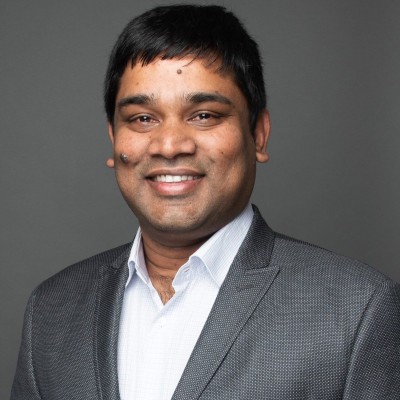 Harish Vundavalli is a Senior Technical Architect at Strategic Education, Inc., where he leads the development of enterprise-scale, cloud-native platforms integrating AI, data, and modern architectures to support core business operations. With over 15 years of global experience across India, Australia, and the United States, he specializes in building scalable, resilient, and production-ready systems. He actively drives AI initiatives within engineering, focusing on practical adoption of emerging technologies while addressing critical challenges in AI security, risk, and governance. His work emphasizes implementing guardrails for trustworthy AI, including model monitoring, data integrity validation, access control, bias detection, and protection against emerging threats such as prompt injection and data leakage, aligning with industry trends toward secure and responsible AI systems. Prior to this, he worked with enterprises including Petco and Commonwealth Bank of Australia, leading large-scale transformation and integration programs. Harish also contributes to the research community as a journal reviewer and is currently working on multiple AI-focused research papers under review, reflecting his commitment to bridging academic research with real-world industry applications. Harish Vundavalli is a Senior Technical Architect at Strategic Education, Inc., where he leads the development of enterprise-scale, cloud-native platforms integrating AI, data, and modern architectures to support core business operations. With over 15 years of global experience across India, Australia, and the United States, he specializes in building scalable, resilient, and production-ready systems. He actively drives AI initiatives within engineering, focusing on practical adoption of emerging technologies while addressing critical challenges in AI security, risk, and governance. His work emphasizes implementing guardrails for trustworthy AI, including model monitoring, data integrity validation, access control, bias detection, and protection against emerging threats such as prompt injection and data leakage, aligning with industry trends toward secure and responsible AI systems. Prior to this, he worked with enterprises including Petco and Commonwealth Bank of Australia, leading large-scale transformation and integration programs. Harish also contributes to the research community as a journal reviewer and is currently working on multiple AI-focused research papers under review, reflecting his commitment to bridging academic research with real-world industry applications.
|
| 15:30 - 16:00 |
EDCC 2026 Tea/Coffee Break |
| 16:00 - 17:10 |
AI-SS 2026 Technical Session 2: Agentic AI Safety and Security (Chair: Professor Hongmei (Mary) He, University of Salford, UK)
- Agentic AI vs Non-Agentic AI: Motivation, Security Implications, and Research Foundations
Shivangi Gupta, Budi Arief and Rogério de Lemos (University of Kent, UK)
- Exploring Agentic AI in Anti-Forensics: Simulation of Evasion Tactics in Digital Investigations
Aderemi Adenihun, Ifeoluwa Ojuolape Oria, Oseodion Ofeimun, Emmanuel Orji, Olayinka Adeboye Adeboye and Segun Akinseye (University of Salford, UK)
- Best Student Paper Award (certificate)
Agentic Knowledge Distillation: Autonomous Training of Small Language Models for SMS Threat Detection
Adel ElZemity, Joshua Sylvester, Budi Arief and Rogério de Lemos (University of Kent, UK)
Each paper will have 15-20 mins for the presentation and up to 5 mins for Q&A.
|
| 17:10 - 17:40 |
AI-SS 2026 Break/Social Networking |
| 17:40 - 18:00 |
AI-SS 2026 Closing Session
The Workshop Chair Professor Hongmei (Mary) He and Co-Chair Professor Shujun Li will announce the winners of the Best Paper Award and the Best Student Paper Award, and give their concluding remarks.
|
| 18:00 - 19:00 |
EDCC 2026 Reception |